
 (630) 528-1955










5 Paint Finishes Types and Where to Use Each One
You spent three weekends agonizing over the perfect blue for your living room. The color goes up. It looks beautiful for about a month.
Then your dog brushes the wall, you wipe the smudge with a damp cloth, and the paint lifts off in a gray streak.
Color was only half the decision. The finish carried the rest.
Most people pick a paint finish by accident. They grab whatever the store recommends, point at a color chip, and walk out without ever thinking about gloss level or surface durability. Six months later, they wonder why the kitchen looks scuffed, and the ceiling shows every roller mark.
What follows is a clear breakdown of paint finishes types, what each one does on a real wall, and which finish belongs in which room. After years of interior painting work at Perfect Walls, we have seen every version of the wrong-finish mistake, and most of them are simple to avoid once you know what to look for.
Paint Sheen, in Plain Terms
Paint sheen refers to the level of light a paint reflects. Lower-sheen drinks light, while higher-sheen bounces it back.
Touch a flat ceiling, then a glossy front door. The flat one feels like chalk. The glossy door feels like glass, and that contrast is gloss level made physical.
A higher gloss means a harder paint film, greater surface durability, and easier wipe-down. Lower gloss means a softer film and better hiding power for dents, drywall patches, and old roller marks.
The paint finishes types you will see at most paint stores cover five steps along that spectrum, from flat (no shine at all) to high-gloss (mirror-shiny). Where you place a wall on that spectrum is your finish choice, and it shapes the room more than any single color decision.
The 5 Paint Finishes Types, Ranked Least to Most Reflective
1. Flat Paint (Matte Finish)
Flat paint sits at the bottom of the gloss scale. Light hits the wall and gets absorbed, which is why a flat ceiling looks soft and even from any angle.
- Sheen level: 0 to 5%.
- Best for: Ceilings, low-traffic bedrooms, formal living rooms, walls with old patches or sanding marks.
- Pros: Hides drywall flaws better than any other finish, covers in fewer coats, makes touch-ups easy because there is no sheen mismatch to give them away.
- Cons: Scrubs poorly. A wet sponge can lift pigment off the wall. Greasy fingerprints, scuff marks, and crayon stay where they land.
A tip from our crews: if you love the soft look of flat paint but worry about cleaning, ask for a scrubbable matte finish and read up on how to clean matte-painted walls before you scrub. You get most of the flaw-hiding power and enough washability for hallways and family rooms.
2. Eggshell Finish
Eggshell sits one notch up. The surface picks up a low, soft sheen, similar to a real eggshell held under a lamp.
- Sheen level: 10 to 20%.
- Best for: Living rooms, dining rooms, hallways, and bedrooms that get more daily use.
- Pros: A quick swipe with a damp cloth lifts most marks. Walls look slightly warmer because the small amount of reflection bounces light around the room.
- Cons: Harder to touch up than flat paint. The sheen layer makes a small repair patch read as a duller spot, especially in raking afternoon light.
If you remember only one paint finish for a typical American home, eggshell is the safe default for walls. We use it on roughly seven out of ten interior wall jobs, as it handles real life without screaming for attention.
3. Satin Finishes
Satin steps up the gloss again, with a pearl-like glow you notice the moment sunlight hits the wall.
- Sheen level: 25 to 35%.
- Best for: Kitchens, bathrooms, kids’ rooms, laundry rooms, anywhere splashes and sticky hands happen.
- Pros: Stands up to repeated scrubbing without thinning out. Resists steam, grease, and most household cleaners. Dries to a smoother film than eggshell, which helps it shed dust.
- Cons: Every dent, drywall seam, and brush stroke catches that pearl sheen. Bad prep shows. So does a roller pattern from a tired arm at 7 p.m.
Prep matters the most with satin finishes, especially when painting textured walls. So, skim a bumpy wall flat before painting, sand between coats, and use a quality roller cover. Cut corners, and you will see them every time the kitchen light comes on.
4. Semigloss Finish
Semigloss is the workhorse for trim, doors, and cabinets. The shine is obvious from across the room, and the surface feels almost slick to the touch.
- Sheen level: 40 to 55%.
- Best for: Bathroom walls in tight or steamy spaces, baseboards, door frames, interior doors, kitchen cabinets, and mudroom panels.
- Pros: Extremely tough film that resists moisture, mildew, and repeated cleaning. A crayon mark wipes off with a soft cloth and a drop of dish soap.
- Cons: Amplifies surface flaws: every patch, dent, and primer thin spot pops. Touch-ups almost always require repainting the whole section, because layered semigloss patches reflect light at slightly different angles.
We almost always use semigloss on trim, even when the walls are eggshell. The contrast adds a finished feel to the room, and the durability earns its keep where shoes, vacuums, and pets keep bumping the lower three feet.
5. High-Gloss (Gloss Finishes)
High-gloss paint reflects like a piano lid. Run your hand over a properly applied coat, and it feels closer to plastic than paint.
- Sheen level: 70% and up.
- Best for: Front doors, accent furniture, decorative molding, shutters, and built-ins designed to be a focal point.
- Pros: The toughest film of any interior paint. Wipes clean almost like glass. Holds color brilliance longer because the resin protects the pigment from light damage.
- Cons: Ruthless about flaws. A pinhole, a brush hair, or a missed sanding scratch will read across the room under any lamp. Plus, application demands patience: thin coats, full dry time, and often a wet-sand between coats.
Most homes use gloss finishes only as accents. A whole bedroom in high-gloss will feel dated and cold. A glossy black front door can lift the curb appeal of an entire facade.
Paint Finishes Types Compared at a Glance
Side-by-side, the differences land faster than any paragraph can spell out. Use this table when you are standing in the paint aisle and need to make a choice.
| Finish | Sheen % | Surface Durability | Washability | Hides Flaws | Best Rooms |
|---|---|---|---|---|---|
| Flat / Matte | 0-5% | Low | Poor | Excellent | Ceilings, low-traffic bedrooms |
| Eggshell | 10-20% | Moderate | Good | Good | Living rooms, hallways |
| Satin | 25-35% | High | Very good | Fair | Kitchens, baths, kids’ rooms |
| Semigloss | 40-55% | Very high | Excellent | Poor | Trim, doors, bathrooms |
| High-Gloss | 70%+ | Highest | Excellent | Worst | Accents, front doors |
How to Make the Right Finish Choice in 3 Questions
Walk into a paint store with three answers ready, and the choice almost makes itself.
- How much traffic does the surface get? Bedroom ceiling? Flat or matte. Hallway scuffed by backpacks? Eggshell at minimum, satin if you have kids. Kitchen wall behind the trash can? Satin or semigloss.
- Does it deal with moisture, grease, or hands? Bathrooms with poor ventilation: satin on walls, semigloss on trim. Kitchen splash zones: satin. Steam-heavy laundry rooms: satin. Front door hit by every shoe in the house: high-gloss.
- How smooth is the wall already? Old plaster with hairline cracks and patched holes hides under flat or eggshell. New, smooth drywall can carry satin or semigloss without giving up its secrets, while heavier drywall textures usually call for a lower sheen.
Three answers, one finish choice, one paint job that lasts. The order matters because traffic and moisture beat aesthetics every time. A pretty matte wall in a five-kid kitchen turns ugly inside a year.
Mistakes We Fix Constantly on Repaint Jobs
Customers call us out for a fresh coat, and the same patterns keep showing up:
- Flat paint in the wrong room. A flat finish in a kitchen looks great for a week, then collects grease around the stove and never wipes clean.
- Mismatched sheens between trim and walls. Eggshell walls beside eggshell trim flatten a room. Bumping trim to semigloss adds the shadow line that gives a space a finished look.
- Skipping primer when going from gloss finishes to a lower sheen. New paint cannot grip a slick old surface, as it peels off in sheets within a year.
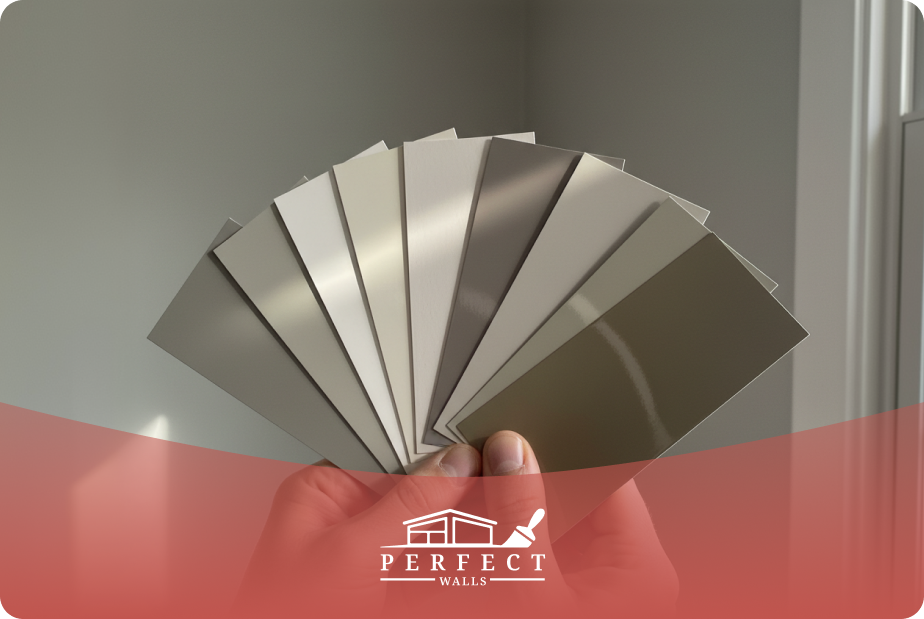
- Picking by color chip alone. Two cans, same color name, two different sheens. Same wall, two completely different results.
Most of these are five-dollar mistakes that cost a thousand-dollar repaint. Catch them before the brush touches the wall.
Get the Right Finish on the First Coat
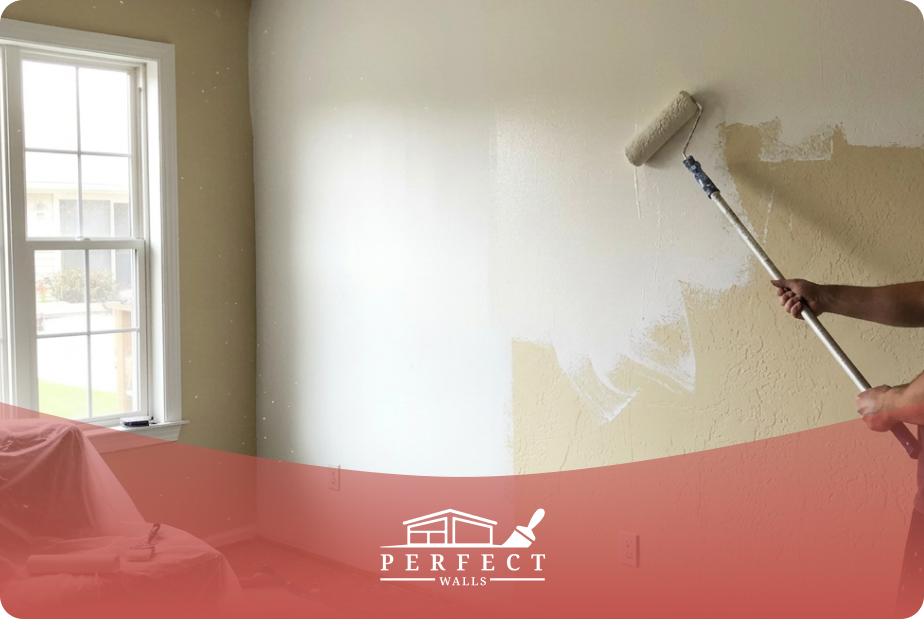
Knowing the different types of paint finishes is one thing. Getting them onto a real wall, smoothly, in the right room, with prep done correctly, is another job entirely.
We handle that part. At Perfect Walls, we have spent years matching finishes to rooms, prepping walls so satin finishes and semigloss coats lay down clean, and saving homeowners from the redo cycle that follows a rushed paint job.
Here is what you get when you bring us in:
- A walkthrough where we recommend a finish for every room, based on how you actually live in your home.
- Surface prep done by people who care whether the trim looks straight from six feet away.
- Color and sheen matched the first time correctly, so you are not repainting the kitchen next spring.
Booking windows fill quickly during spring and fall. If you are weighing a project, send us your rooms, and we will scope it out together. Reach out today for an estimate, and we will take it from there.
FAQs: Paint Finishes Types
1. What is the most popular paint finish for interior walls?
Eggshell is the most popular paint finish for interior walls in most US homes. It hides minor flaws better than satin or semigloss, wipes clean more easily than flat paint, and looks soft in living rooms, dining rooms, hallways, and bedrooms. For high-moisture rooms like bathrooms and kitchens, satin finishes are usually the smarter, more durable pick.
2. Should ceilings and walls have the same paint finish?
No. Ceilings almost always look best in flat paint because it hides drywall seams, roller marks, and glare from lighting. Walls usually need slightly more durability, so eggshell or satin finishes work better for everyday wear. Matching sheens on both surfaces tends to flatten the room visually and exposes ceiling flaws every time the lights hit them.
3. Can you paint over a glossy finish with a flat one?
Yes, but only with prep. Glossy surfaces are too slick for new paint to bond, so you need to lightly sand or de-gloss the wall first, wipe off dust, and apply a bonding primer. If you skip those steps, the new flat paint will peel, streak, or rub off within weeks, no matter how many coats you add.
4. What paint finish hides wall imperfections best?
Flat paint hides wall imperfections best because it absorbs light instead of reflecting it, masking dents, patches, sanding marks, and drywall seams. Matte finishes offer nearly the same flaw-hiding power with slightly more durability. The trade-off is washability: flat surfaces scuff and stain faster, so reserve them for ceilings, low-traffic bedrooms, and walls you rarely touch.
5. How do I know if my paint finish is matte, eggshell, or satin?
Shine a flashlight on the wall at a low angle and watch the reflection. Matte and flat paint absorb light with almost no glare. Eggshell shows a soft, low sheen, similar to a real eggshell. Satin reflects more clearly and feels slightly slick to the touch. If light bounces sharply off the surface, you are looking at a semigloss or higher finish.