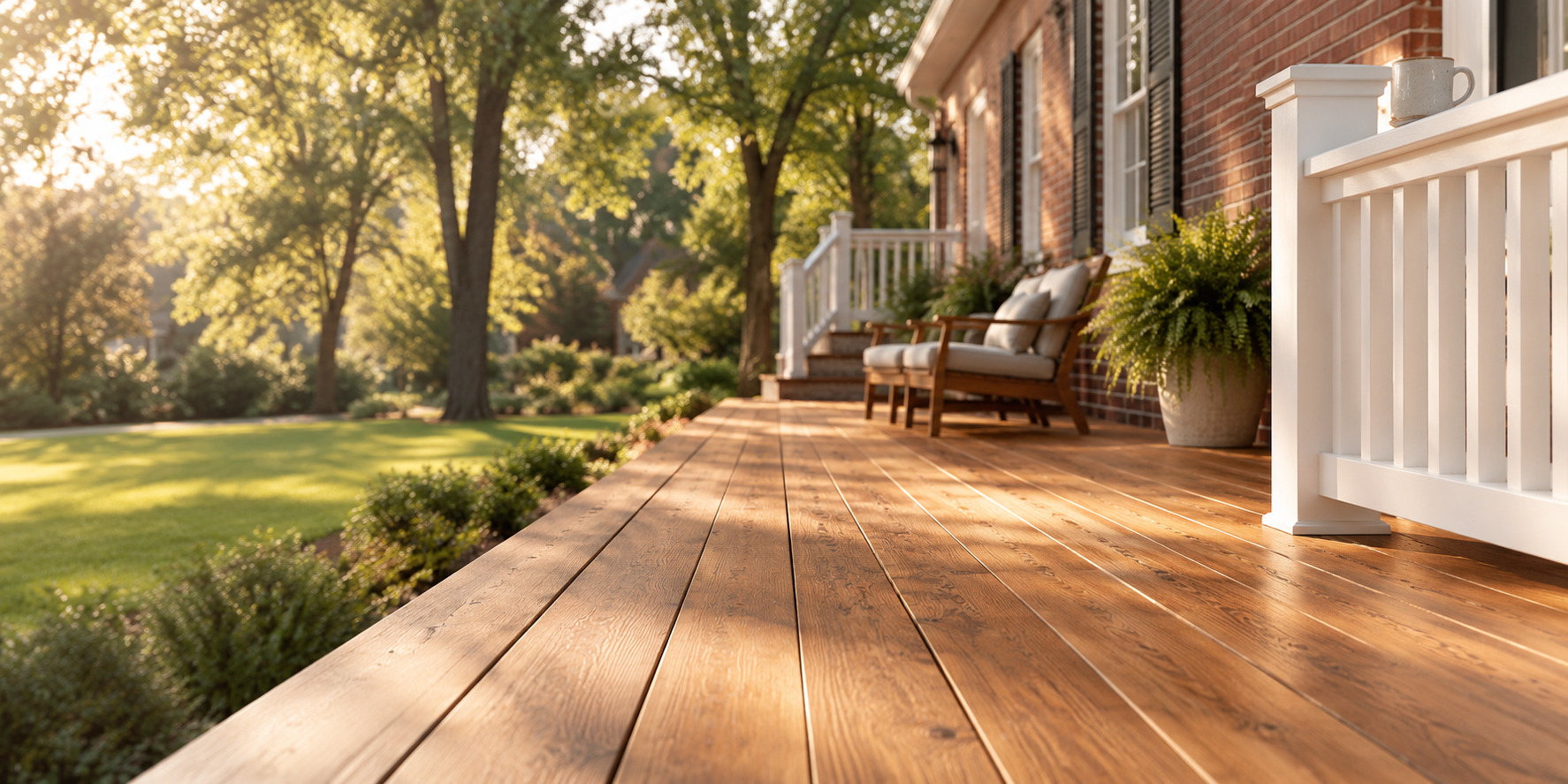
Restored wood deck with white railing and outdoor seating

Deck Restoration for Many More Years Outdoors

A weathered deck is one restoration away from many more years of use.

Request a Consultation
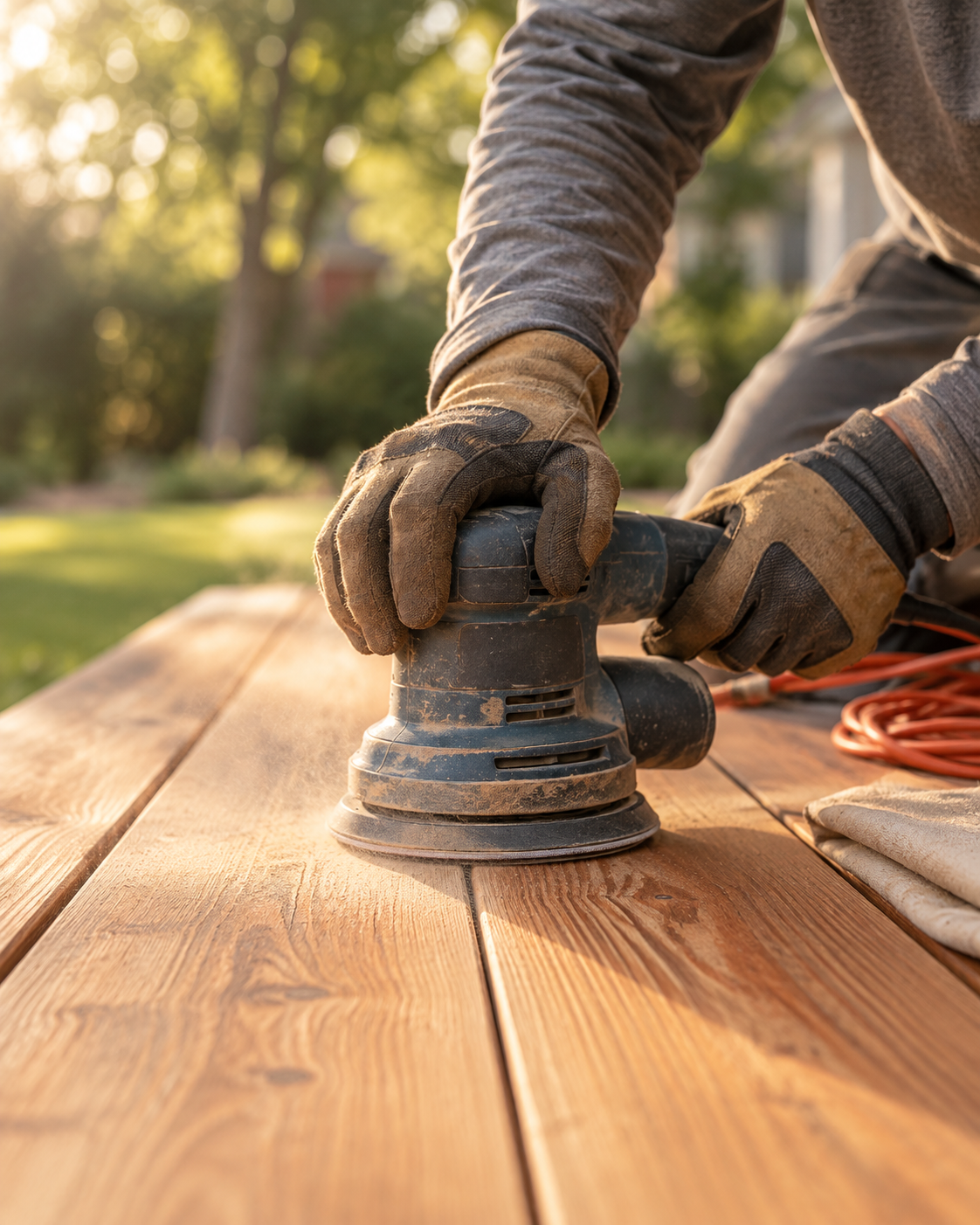
Craftsman sanding a wood deck with an orbital sander

Chicago’s Premium Deck Restoration Services

A deck restoration transforms tired, weathered wood back into an outdoor space your family actually uses, whatever it’s built from.

Cedar weathers differently than pressure-treated pine, and composite decking plays by its own rules entirely, so a good restoration plan starts with knowing which material is under your feet. Add Chicago’s climate on top of that: muggy summers, then winters cold enough to crack a finish that’s already worn thin.

Here’s what that means for your deck:

Matching the restoration approach to the actual material: cedar, pressure-treated pine, or composite decking.

Cleaning and repair before a single drop of stain goes down.

A sealed finish built for Chicago’s shift between humid summers and freezing winters.

Twenty-five years of watching how Chicago weather works on wood gives us a good read on where a deck usually starts to fail, and that instinct carries into every restoration we take on. The result holds up through several summers of real use.

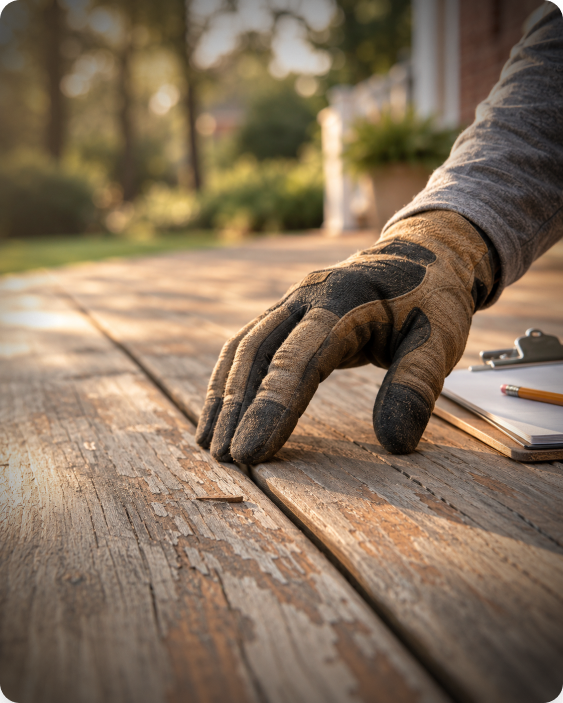
Gloved hand checking worn deck boards

Reading the Wear Before We Recommend a Restoration Plan

Most of what makes an old deck look past its prime is just surface wear and tear, exactly the kind a restoration is built to fix. Spotting the rarer case that calls for something bigger starts with knowing what to look for, board by board.

A closer look tells the rest of the story:

Grayed or faded boards, where sun exposure has broken down the surface fibers while the wood underneath stays solid.

Splintering or rough patches, often from an old coating that has worn away and left the grain exposed.

Dark blotches or a slippery film, signs of mold or mildew that need treating before anything else happens.

Peeling or flaking stain, usually from a finish that went on over dirty or damp wood the first time around.

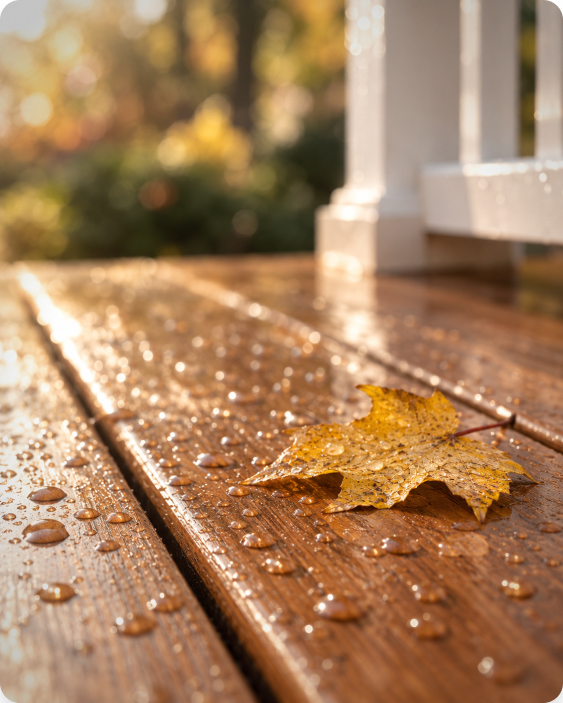
A quick water test: water that beads on the surface means the seal is holding, and water that soaks straight in means it’s due for attention.

A solid frame with a handful of soft boards is a strong candidate for restoration. Heavier rot at the joists or the ledger board where the deck meets the house changes the conversation, and that’s exactly what we check first. Our exterior services crew brings that same read on wear and prep to siding and fences facing those same Chicago seasons.

Wood That Ages Differently, Restored Differently

Every deck is built from a different material, and the restoration approach shifts with it.

Cedar

Ages gracefully and holds oil-based stains well, thanks to natural oils that resist water-based products.

Pressure-Treated Pine

Needs a full drying period before it will accept any stain, especially soon after installation.

Composite Decking

Including Trex-style boards, it skips staining altogether but still benefits from cleaning, inspection, and the occasional repair.

Knowing the construction and condition of the wood before starting protects the integrity of the entire deck, not just the parts that show wear. Craftsmanship shows up in that kind of attention as much as it does in the finished coat of stain.

How We Restore a Deck, Board by Board

Every deck restoration follows the same five-stage sequence, and doing each stage in order, with the right drying time between them, is what gives a finish real staying power. Here’s how our crew works through that sequence on every project we take on:

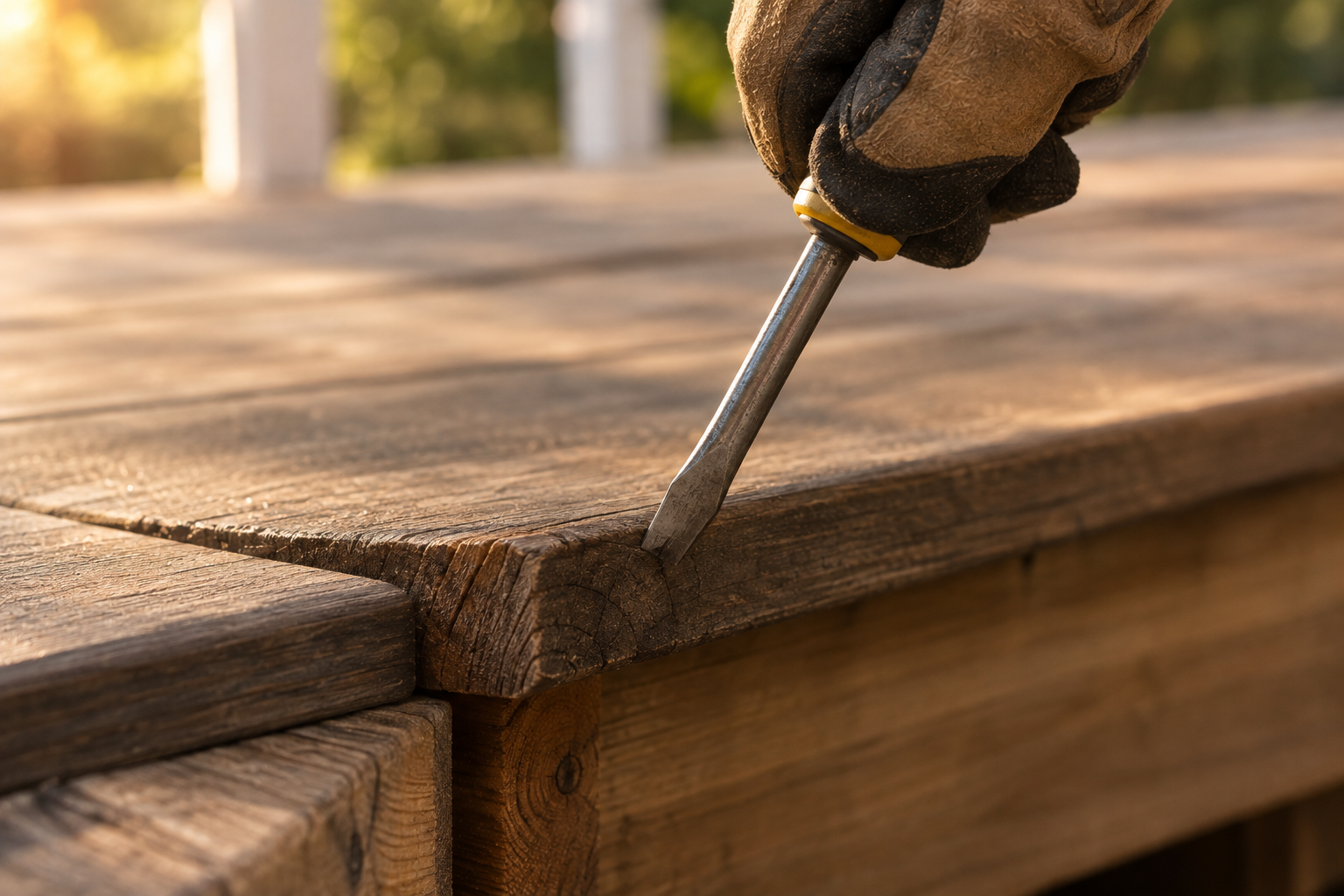
Inspect and Assess. Every deck restoration starts with a walk of the whole surface, covering boards, railings, stairs, and the connection points that matter most for safety. Anything soft, cracked, or loose gets marked before cleaning begins.

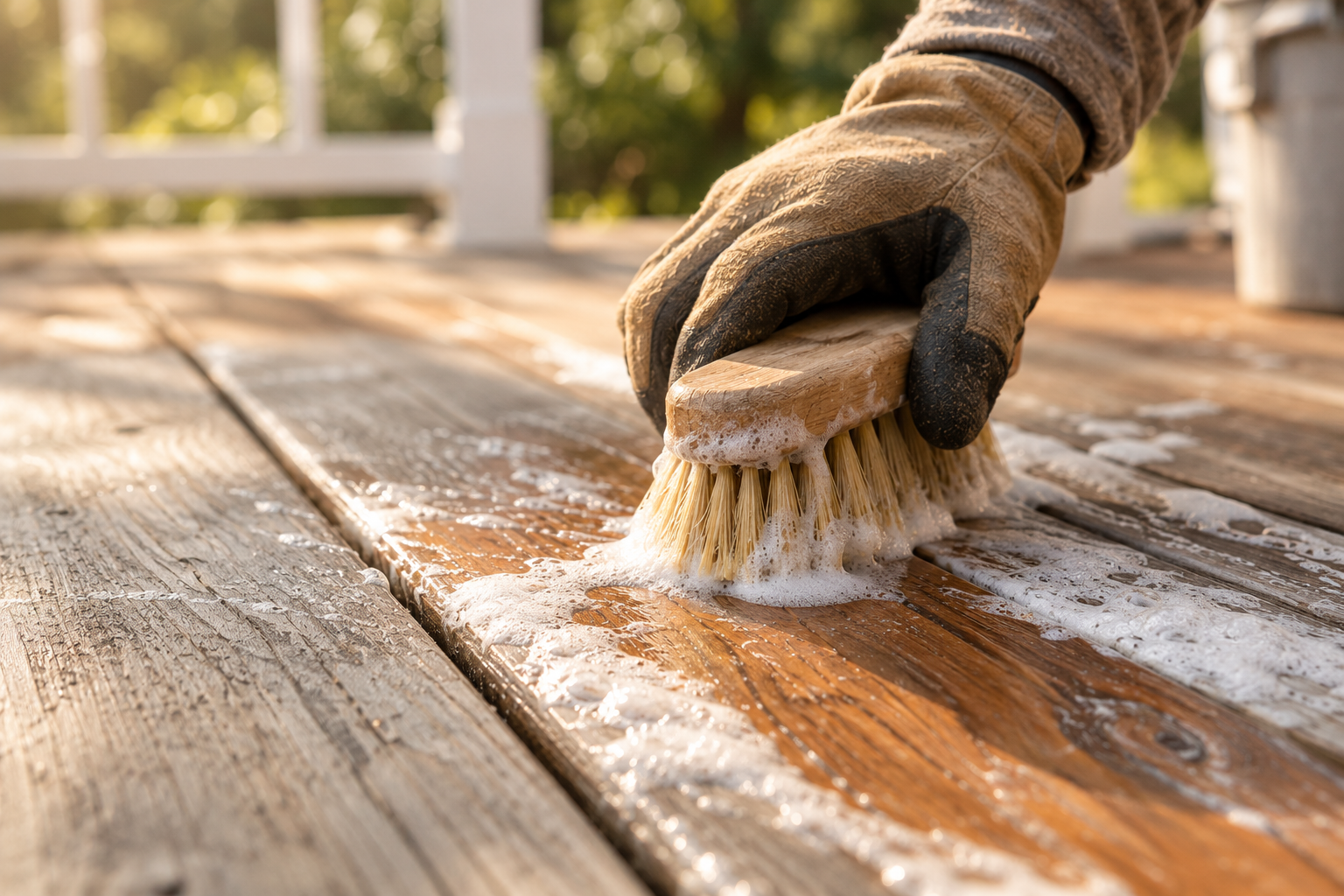
Clean and Prep. Deck cleaning removes dirt, mildew, and old finish using a pressure wash or deck-specific cleaner, worked with the grain and kept gentle on softer woods like cedar. A water test on bare wood tells us when the surface is ready for the next step.

Sand and Repair. Sanding smooths rough patches and opens the grain so stain can actually soak in. Small deck repair work, like swapping out a cracked or warped board, happens at this stage too, along with resetting any loose fasteners.

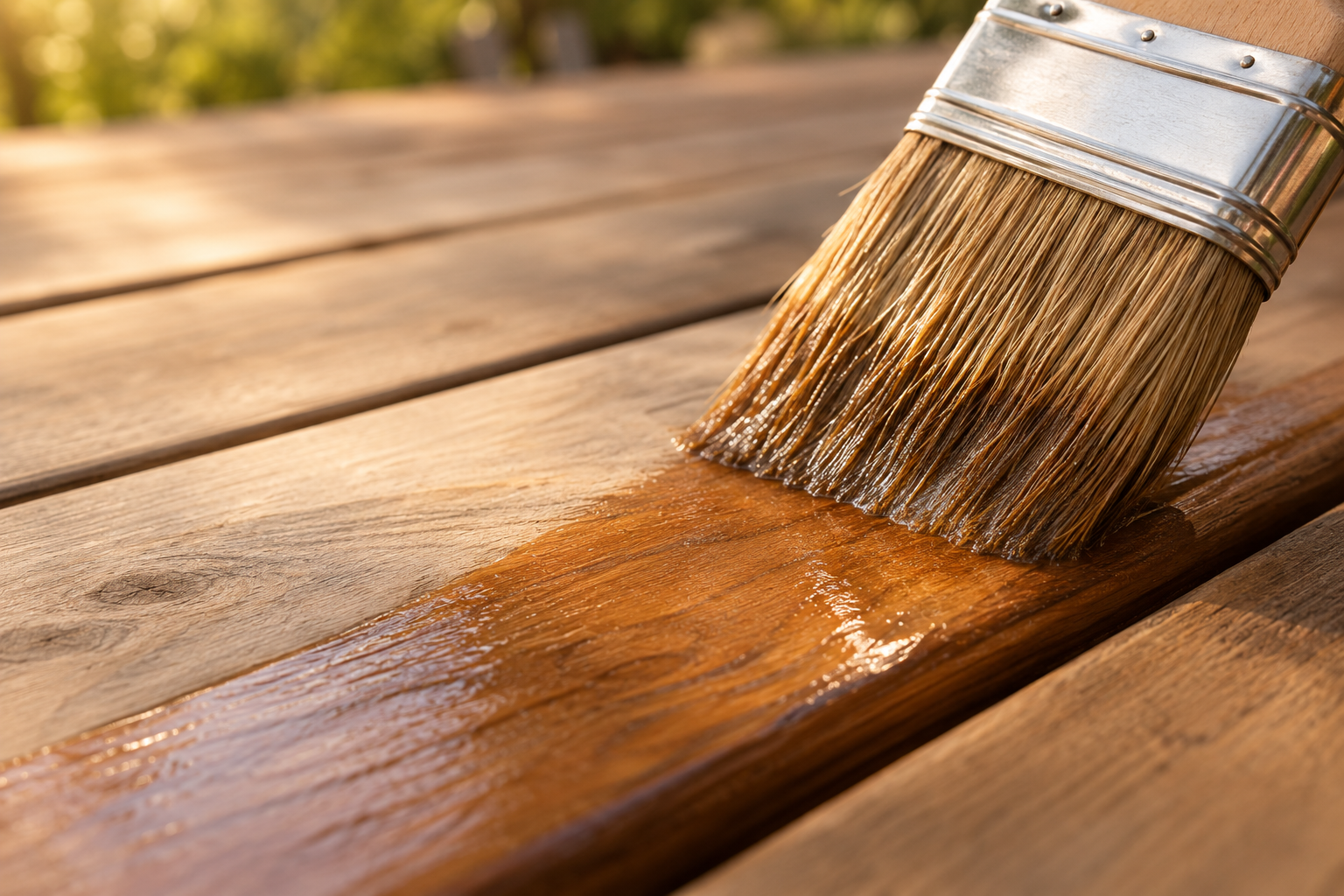
Stain and Seal. Two thin coats hold up better than one heavy one, and every railing, step, and underside gets the same coverage as the open deck surface. High-performance coatings protect the wood from moisture and UV rays for the seasons ahead.

Protect Going Forward. A restored deck still benefits from a simple maintenance rhythm: regular sweeping, an occasional light clean, and re-staining every couple of years, the kind of ongoing care that keeps it looking new. We treat this as an ongoing relationship with a deck, built one project at a time.

Picking a Stain That Matches How You Use the Space

The right wood stains shape both the look of a deck and how well it holds up over time, and the pick depends on the wood’s condition as much as personal taste. A deck with grain worth showing off calls for a different stain than one better served by full, even coverage.

STAIN TYPE WHAT IT DOES BEST
STAIN TYPE Transparent stains
WHAT IT DOES BEST Show off the natural grain, with the least UV protection of the three.
STAIN TYPE Semi-transparent stains
WHAT IT DOES BEST Add color while keeping some wood texture visible, a common pick for restoration projects.
STAIN TYPE Solid stains
WHAT IT DOES BEST Cover imperfections completely, a good fit for older wood in rougher condition.

Oil-based products tend to penetrate deeper on hardwoods, while water-based options dry faster and clean up easier on softer species like pine and cedar.

Color matters just as much as protection. Through our partnerships with Sherwin-Williams, Benjamin Moore, and Behr, homeowners can choose from a wide range of stain colors, and an on-site design consultation helps match that color and finish to the home’s exterior and your budget.

Rain-beaded deck boards with a fallen maple leaf

Standing Up to Chicago Winters and Summers Alike

A deck sits face up to the weather in a way vertical surfaces like siding never do, catching rain, snow, and direct sun with nothing to deflect it. Chicago adds its own pressure on top of that: humid summers swell the wood, freezing winters contract it, and waterproofing is what stands between that cycle and a finish that lasts.

That protection comes down to a few specific layers:

High-performance sealants block moisture before it reaches the wood fibers.

Mold-resistant coatings keep dark patches from forming again.

UV-resistant coatings slow the fading that turns a fresh stain gray within a season.

Deck restoration is one piece of a bigger seasonal picture for a home’s exterior renovation, and protecting the wood now preserves its value while saving a much bigger repair bill later.

Schedule a Deck Assessment
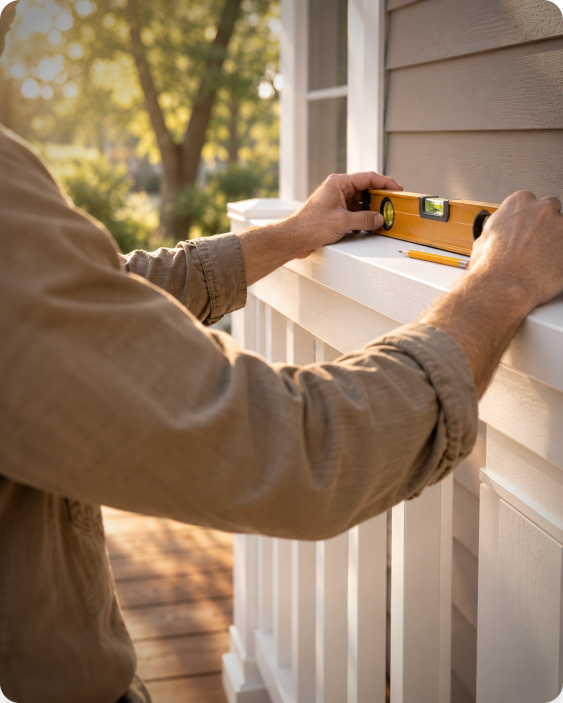
Contractor checking a deck railing with a level

Two Decades of Deck and Exterior Work

Deck restoration rarely happens on its own. Once you’re looking closely at one weathered surface, it’s hard not to notice the fence behind it fading the same way, or the siding that’s taken twenty of the same Chicago winters. At Perfect Walls, we built our crew around that reality: whoever shows up to look at your deck is just as ready to talk about everything else the yard is asking for attention.

That’s why one team handles the whole picture, from the deck boards to the fence line to the trim around every window: the same eye for how the wood has aged, products chosen to work together across every surface, and a single schedule covering the whole property.

That habit carries indoors too. Our interior services team works from that same wood-refinishing approach on railings, trim, and woodwork, which is often how one deck project turns into an ongoing relationship with a home.

Grill and cold drinks on a restored wood deck at sunset

Let’s Look at Your Deck Together

It’s easy to let a deck slide another season, telling yourself the graying boards or rough spots can wait. Most of the decks we bring back looked exactly like that going in, and a short visit is enough to give you an honest estimate and say whether a restoration makes sense or the deck can hold for another year.

Picture your backyard again as a place worth spending an evening on: the grill going, drinks sweating on the railing, or even bare feet on wood that doesn’t catch a splinter. That’s what a solid restoration is built for, and getting on the schedule now means it’s ready well before the season is in full swing.

Get in Touch About Your Deck

FAQs: Deck Restoration

FAQ 1

How long does a deck restoration take?

A deck restoration typically takes two to four days from start to finish, and most of that time goes toward letting the wood dry properly between steps. Cleaning, sanding, and staining usually fit into a few focused work sessions once the surface is ready. Deck size and weather can shift the timeline by a day or two.

FAQ 2

Can a deck that has turned gray be saved?

Yes. Graying is surface-level fading caused by ultraviolet exposure, and the boards underneath are usually still sound. Cleaning removes the grayed layer and reveals fresh wood, which then accepts stain normally. A graying deck with a solid frame is one of the more straightforward restoration cases we see across Chicago.

FAQ 3

How often should a restored deck be re-stained?

Re-staining every two to three years keeps a Chicago deck protected, depending on sun exposure, foot traffic, and the stain used. A simple check helps decide: water that beads on the surface means the seal is still working, and water that soaks straight in signals it is time for another coat.

FAQ 4

Is staining better than painting for a deck?

Stain is generally the better choice for a deck because it soaks into the wood grain and moves with the wood as temperatures change through the seasons. Paint sits on top of the surface, which tends to peel and chip on boards that get walked on daily. Stain also lets the wood’s natural character show through clearly.

FAQ 5

When is a deck too far gone for restoration?

A deck usually needs full replacement when the frame, joists, or ledger board show rot, or when more than a quarter of the deck boards feel soft or spongy underfoot. Surface issues like graying, splinters, or a worn finish are almost always restorable with the right process. A short inspection settles the question quickly.

Your Dream Home Starts with the Right Paint

Your dream home deserves walls as unique as you are, so let's make it happen together. With our expert guidance and endless color options, we'll help you create a space that truly reflects your style. Call today for a consultation, and let's start bringing your vision to life.

Form Image Call for a Consultation

Book Your Consultation

Where Is the Work Needed?
5 stars

100+

Online Reviews