 (630) 528-1955










Storm-Ready Exterior Home Renovation: Upgrades That Last
You hear it first.
A drip that shows up when the wind shifts. Then a soft spot on a corner board, and paint that starts to curl at a seam until the whole edge lifts.
Storms work on the weak details you never notice. Water finds them, then spreads.
What follows draws from our exterior home renovation services and covers upgrades that hold up across humid Midwest summers, Chicago freeze-thaw winters, and the wind-driven rain that rolls in off the lake.

What Pulls An Exterior Apart
Two forces work on every exterior, and a third accelerator carries the damage through them.
Water gets in. It slips through cracked caulk, failed flashing, and gaps around penetrations.
Sun and temperature swings do damage. Heat bakes paint. Cold pulls trim joints open. In Chicagoland, freeze-thaw runs that cycle dozens of times each winter, so seals break, water follows the same path, and the wood underneath gets no chance to dry.
Trapped moisture takes over. Once a surface stays damp, mildew, rot, and insects move in, even when the damage looks minor from the street.
The exterior threat stack:
- Moisture intrusion: leaks that keep feeding damage.
- Movement: seasonal expansion that breaks caulk lines.
- Exposure: UV, wind, and impact that wear finishes down.
A storm-ready exterior home renovation closes the gaps at flashing, sealant lines, and substrate so those forces run out of entry points.
Common Exterior Home Renovation Problems (And What Fixes Them)
Most exterior projects come down to four recurring failures. Each one shows a tell, a cost if ignored, and a fix that reaches past the visible surface.
Cracked Or Damaged Siding And Stucco
- What you see: cracks at window corners, loose panels, hollow-sounding stucco, warped boards, or soft trim.
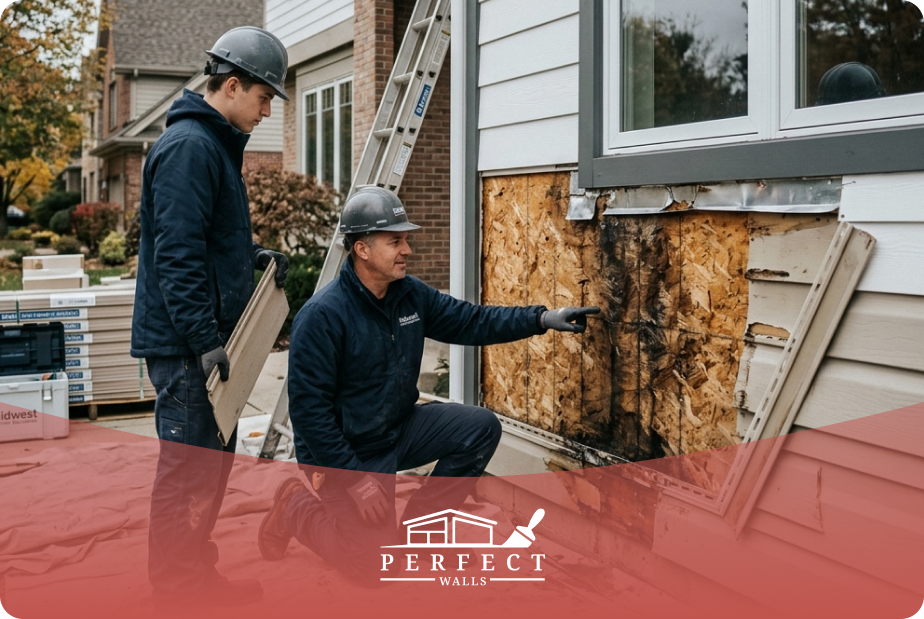
- Why it matters: cracks and open seams act as entry points. Water gets behind the cladding and stays there.
- What a real fix includes: selective demolition of failed areas, sheathing repair, a restored weather barrier with sealed laps, corrected flashing at penetrations, then a rebuild with joints sealed using a sealant rated for UV and movement.
Peeling, Faded, Or Chalky Exterior Paint
- What you see: bubbling near soffits, flaking along trim, fading on sun-facing walls, chalk that rubs off on your hand.
- Why it matters: failed paint turns wood and fiber surfaces into a sponge. Water soaks in, swells the substrate, and speeds up rot.
- What a real fix includes: wash, scrape, and sand to sound material; treat mildew; prime bare or patched areas with an adhesion-focused primer; then topcoat with a 100% acrylic exterior system matched to the surface type.
Water Intrusion Around Windows, Doors, And Roof Edges
- What you see: stains around window corners, musty smells after storms, soft casing, and interior drywall shadows on exterior walls.
- Why it matters: leaks almost never stop on their own. They travel behind trim and show up far from the entry point.
- What a real fix includes: diagnose the path, then rebuild the opening details until water has nowhere to slip in. That can mean pan flashing, head flashing, proper shingle-lap sequencing, new sealants, and corrected transitions where rooflines meet walls.
Storm Scars And Tired Curb Appeal
- What you see: hail dings, loose sections after wind, sun-faded color, trim that looks puffy at joints, a facade that reads neglected.
- Why it matters: buyers and appraisers judge from the sidewalk, and ongoing exposure keeps degrading the same weak spots.
- What a real fix includes: replace storm-damaged pieces after waterproofing details are corrected, then finish with a coordinated paint and trim transformation that matches the home’s style and light.
Once water has crossed the wall, the interior side picks up after the exterior fix is closed: trim, paint, and drywall repair and painting before the room reads finished again.
Materials That Earn Their Place On A Weather-Tight Exterior
Your material choice decides how much work the exterior will demand later.
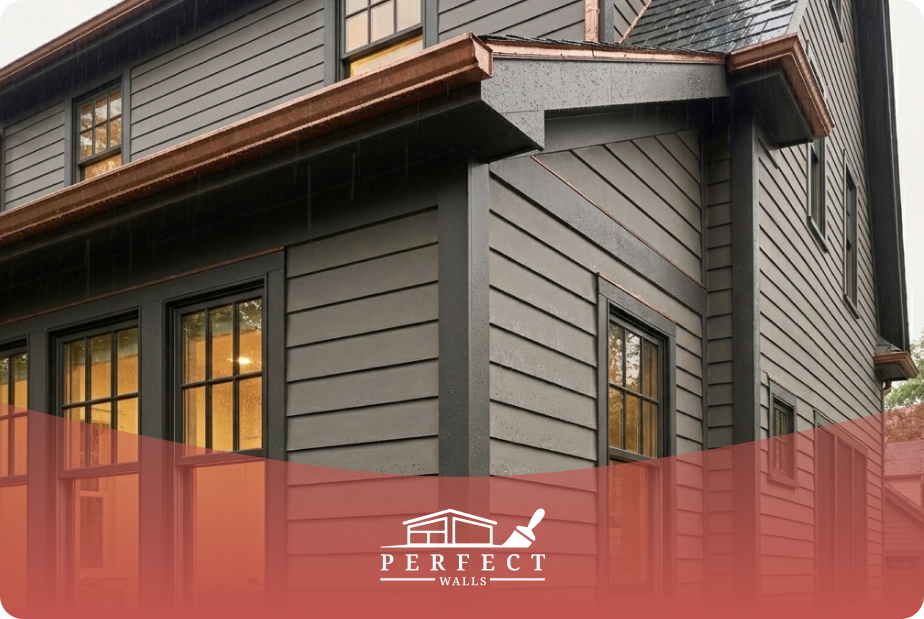
Fiber Cement Siding
- Best for: homeowners who want low-drama durability.
- Why it works: resists rot and many insect pressures, holds paint when installed with proper clearances, and handles wet-dry cycles better than most wood products.
- What to insist on during install: correct fastener schedule and placement, proper clearance from grade and roofing, sealed cut ends and edges, flashing at all openings, and a real drainage path behind the siding.
Stucco (Done As A Full System)
Your stucco can hold for decades when it is built with layers that manage water.
- A true drainage plane behind the lath.
- Weep screeds at the base.
- Control joints where the wall needs them.
- A coating strategy that matches movement and exposure.
Skip the system, and you get cracking, trapped moisture, and early failure on Chicago walls that ride the freeze-thaw cycle through every winter.
Premium Exterior Coatings
Your paint is the visible layer of a system that has to drain, breathe, and flex.
- Best for: surfaces that already drain and seal under the finish.
- Why it works: a 100% acrylic exterior system with a 15 to 25 year manufacturer warranty bonds tight when the substrate is sound.
- What to insist on during install: prep that takes the surface back to a clean profile, primer matched to the substrate, and elastomeric coatings reserved for masonry or stucco that needs a bridge over small movement.
A capable paint company runs prep, primer, and topcoat as one continuous job and treats coatings as part of the building envelope.
Windows And Doors Rated For Your Exposure
In high-wind or storm-prone areas, your openings carry a heavy share of the storm load.
- Best for: replacing weak originals in coastal, hurricane, and freeze-thaw zones.
- Why it works: better water management at sills and heads, stronger frames, improved seals, and glass that improves impact resistance and comfort.
- What to insist on during install: pan flashing, head flashing, and a sealant package rated for the exact wind and water exposure on your wall.
Materials That Need Real Detail Work
Some common choices can hold their own when the detailing is right.
- Vinyl in harsh sun: insist on proper fastening and expansion gaps.
- Wood trim: swap to PVC or composite in the most exposed zones.
- Builder-grade caulk: use polyurethane or hybrid sealants rated for movement and UV.
Painted wood still earns a place on the right details when the prep is real. Plan exterior wood painting with full sanding, a primer matched to the species, and a topcoat rated for your exposure, and the surface holds its line next to the harder cladding around it.
Where Exterior Renovation Dollars Earn The Best Return
Put money where it prevents repeat repairs.
- Flashing and transitions: the highest payoff. Stops water at openings and rooflines.
- Weather barrier repairs: sealed laps, correct shingle-style layering, and clean penetrations.
- Siding and trim replacement: fixes the substrate you are asking paint to protect.
- Opening upgrades: windows and doors that resist leaks and drafts.
- Drainage and runoff control: gutters, downspouts, grading, and splash management.
- Finish work: paint, lighting, and small curb appeal details.
A common pattern on inspections: a homeowner repaints the same wall every three or four years, then watches it peel again, because the kick-out flashing above the window has been missing the whole time. Paint cannot beat unresolved water. Renovation work that closes the flashing first protects every dollar spent on the topcoat.
Three Upgrades To Do Before The Next Storm Season
A full renovation can fall outside this year’s budget. If a complete exterior is still a few seasons out, three smaller home improvement projects buy time without giving up wall.
- Correct kick-out flashing at roof-to-wall intersections. Kick-out flashing alone prevents a huge share of hidden water damage behind siding.
- Swap exposed wood trim in splash zones for PVC or composite. You stop the rot cycle at the spot where it tends to start.
- Pull and reset any opening that already shows stains. A window or door with a failed sill detail will not fix itself, and every storm widens the gap.
Keep gutters moving water away from the foundation while you wait on the rest.

A Contractor-Grade Process, Step By Step
A well-run exterior home renovation moves in clear stages, and a serious contractor walks each one with you, names the materials, and shows the flashing details before the siding goes back on. Crews that stay in the comfort zone of repaint-and-recaulk skip the steps that decide whether a renovation holds.
1) Inspection And Planning
A real inspection looks past the obvious: soffit and fascia, trim moisture, window and door conditions, roof edges, gutter performance, and how water moves off the site. You should leave with a written scope, priorities, and a realistic schedule.
2) Permits And Compliance
Siding replacement, window changes, and structural repairs often require permits, and HOAs run color and material approvals on their own clock. Your contractor should pull permits in their name, list numbers on the contract, and schedule rough and final inspections. Ask for photo documentation of every layer before it gets covered.
3) Demo And Substrate Repair
Once the cladding comes off, the real condition of the wall shows itself. Failed siding, soft sheathing, and rotted trim get cut back to sound material, wet sheathing gets replaced, and visible mold gets treated before anything new goes on top. Ask to see this stage in person before the new weather barrier goes up.
4) Waterproofing As a System
Waterproofing works as a chain, and the same failure points repeat across most homes: roof-to-wall intersections, kick-out terminations, window head and sill flashings, deck ledgers, and dormer cheeks. Each layer of weather barrier and flashing should lap over the one below so water sheds outward. A garden-hose test on the finished cladding and an infrared interior scan after the first heavy rain expose hidden leaks while they are still cheap to fix.
5) Cladding, Trim, And Finish
With the wall waterproofed, the visible work goes back on in the order the manufacturer specifies, with the fastener pattern, clearances, and expansion gaps the product calls for. Color sampling should happen on your actual wall, in your actual light, before you commit to a gallon order. A final walkthrough closes the punch list before the crew demobilizes.
Typical timelines and warranties: 1 to 2 weeks for inspection and scope, 2 to 6 weeks for permits, 2 to 8 weeks of jobsite work, at least 2 years of workmanship warranty (5 years from serious contractors), and 15 to 50 years pass-through on materials.
Maintenance That Protects Your Renovation Investment
An exterior home renovation pays off in pieces, across seasons.
Walk the wall after the first hard freeze, before the rains, and after the year’s biggest storm. Watch for signs that escalate fast: soft trim under thumb pressure, hairline cracks that hold a dime, mildew back within weeks of a wash, caulk pulled from one side of a joint. Confirm the yard still slopes water away from the foundation.
Each warning reads small, and the cost compounds out of sight. A skipped gutter clear rots a fascia in two seasons. An un-recaulked window head telegraphs into drywall by year three.
Call a pro when softness spreads past a single board, when stains return after a fresh coat, or when interior shadows show on an exterior wall. The same rhythm holds for anything weather-exposed; restoring a deck on a steady cycle keeps boards, fasteners, and finish moving as one system.
Lock In Your Exterior Before The Next Storm
Storm season does not wait. The details that fail in a storm tend to stay hidden until they are too costly to fix.
An exterior inspection from Perfect Walls turns guesswork into a written plan. You walk the wall with a contractor who names the materials, points to the flashing details that decide the next decade, and shows you which fixes have to come first.
There is no pressure to commit on the spot. You leave with a scope, a sequence, and a real read on what your home needs to hold up through another Chicago season.
If you have seen any of the warning signs above, get in touch with Perfect Walls and put your exterior home renovation on a real schedule before the next round of weather rolls through. The right detail work today saves the bigger redo, and the bigger insurance fight, later.
FAQs: Exterior Home Renovation
1. What makes an exterior renovation “storm-ready”?
A storm-ready exterior home renovation focuses on water management and tolerance to movement. It prioritizes flashing, weather barrier continuity, sealed transitions, and materials that handle wet-dry cycles. The details behind paint and siding decide whether water stays out and whether the finish stays bonded through storms.
2. How do you know if water is getting behind your siding?
Water intrusion often shows up as stains near windows, soft trim, musty odors after rain, bubbling paint, or recurring caulk failures. A contractor can confirm with moisture readings, targeted removal, and inspection of the flashing and weather-barrier laps. The fix has to close the entry path, then the cosmetic repair holds.
3. What exterior materials hold up best in harsh weather?
Fiber cement, well-detailed stucco systems, and quality masonry tend to perform well in harsh weather because they resist rot and handle exposure. Around Chicagoland, fiber cement and brick hold up well to humid summers and freeze-thaw winters, while stucco needs a sound system to ride the same cycle. The install details matter as much as the choice.
4. Do you need permits for exterior remodeling?
Permits are common for siding replacement, window and door changes, roofing, and structural repairs. Painting alone often does not need a permit. Local rules vary, so confirm before you start. A contractor should handle permitting, list permit numbers on the contract, and coordinate required inspections to protect the project and your resale paperwork.
5. What should be included in a contractor’s scope of work?
A strong scope includes prep, demolition, substrate repairs, weather-barrier work, flashing details, sealants, coatings, cleanup, protection for landscaping, and warranty terms. It should name materials and quantities. Clarity in the scope predicts job quality because it forces details to be planned rather than guessed.